
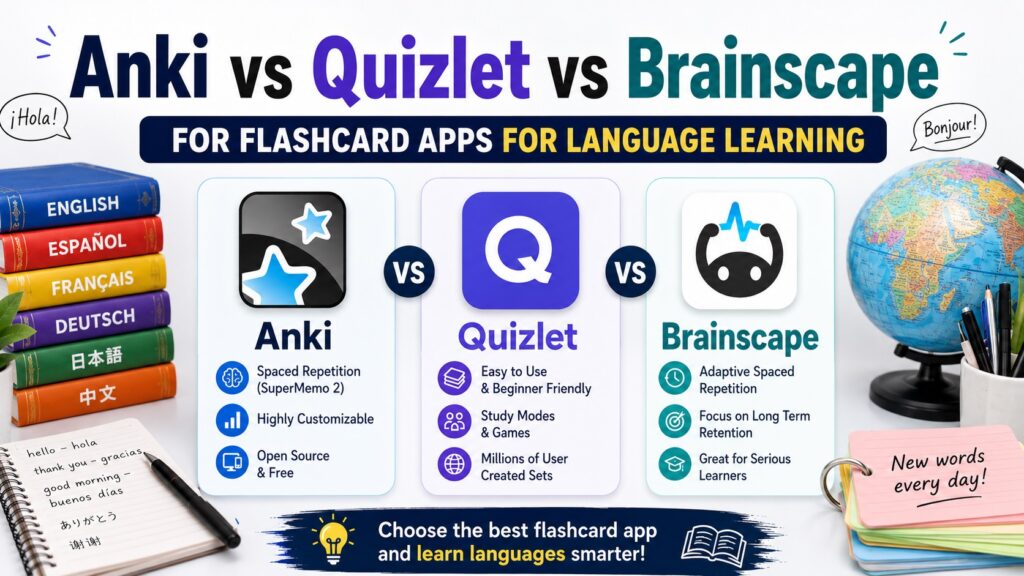
Looking for Flashcards for Language Learning? Consistency, practice, and the right study tool are needed for learning a new language.
Flashcards are one of the most effective ways to learn vocabulary, grammar rules, and daily expressions. Although traditional flashcards still work, digital flashcard apps are helpful for those who are willing to study faster, smarter, and more conveniently.
Most apps use spaced repetition, multimedia support, and progress tracking to help learners remember words for a longer time. Choosing the right app, however, is difficult because many options are available.
This article will provide you with a list of the top 3 flashcard apps. It will also help you understand the difference between these apps to select the right app for your desired goal.
Quick Comparison Table: 3 Language Learning Flashcard Apps
| Feature | Anki | Quizlet | Brainscape |
| Best For | Serious learners & advanced users | Beginners, students & classrooms | Structured exam preparation |
| Spaced Repetition | Yes (Advanced) | Basic | Yes (Confidence-based) |
| Ready-made Flashcards | Huge community library | Massive collection | Curated premium decks |
| Audio & Images | Yes | Yes | Yes |
| Collaboration | Limited | Excellent | Good |
| Mobile Support | Android, iOS, Desktop | Android, iOS, Web | Android, iOS, Web |
| Free Version | Yes | Yes (Limited) | Yes (Limited) |
| Learning Curve | High | Easy | Moderate |
| Overall Rating | ⭐⭐⭐⭐⭐ | ⭐⭐⭐⭐☆ | ⭐⭐⭐⭐☆ |
Anki App for Language Learning
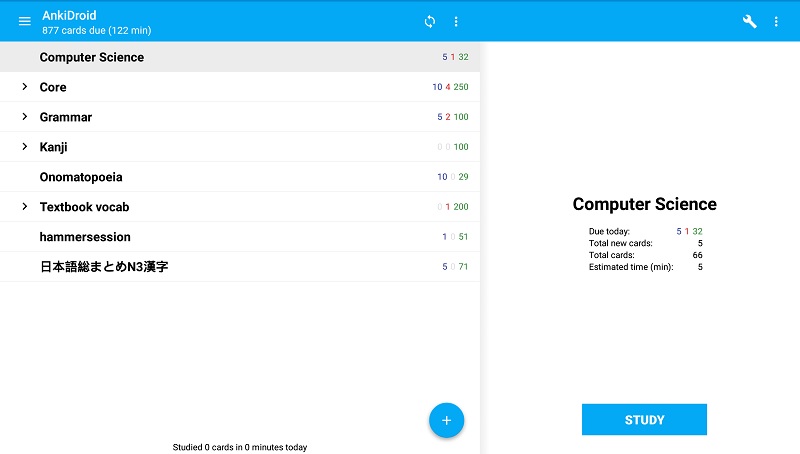
This app has been one of the most trusted flashcard apps for years. Language learners, medical students, and professionals preparing for difficult exams widely use this app.
Its powerful spaced repetition system is its biggest strength. It schedules reviews based on your performance in remembering the card. The app also provides you with complete control over your decks.
You can create text cards, image cards, audio flashcards, and even cards with videos or mathematical formulas. Thousands of community-based language decks covering Spanish, French, Japanese, German, Korean, Arabic, etc., are also available.
Key Features
- Advanced spaced repetition algorithm
- Fully customizable flashcards
- Supports audio, images, and video
- Large collection of shared decks
- Cross-device synchronization
- Thousands of community add-ons
Pros And Cons
| Pros | Cons |
| Completely free on desktop and Android | Old-fashioned interface |
| Excellent for long-term vocabulary retention | Takes time to learn |
| Highly flexible customization | Manual deck creation can be time-consuming |
| Strong support from a large user community | iOS version requires a one-time purchase |
| Works well for beginners and advanced learners |
Anki Pricing
- Desktop: Free
- Android: Free
- iPhone/iPad: One-time purchase
- AnkiWeb Sync: Free
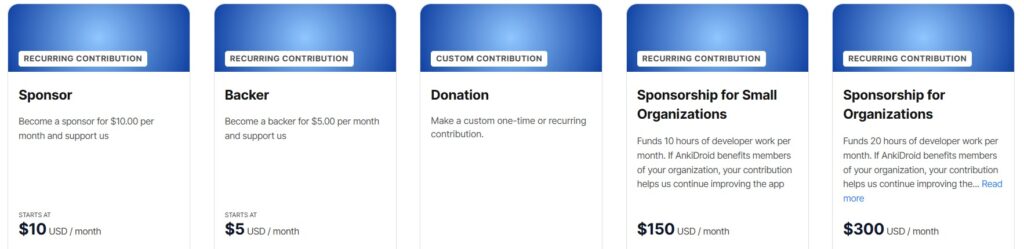
Anki’s Donation Program
Though it’s free, they run a donation program where you can donate to Anki to cover their basic development costs.
Who Should Use Anki?
- Serious language learners
- Medical and law students
- Users who enjoy customizing study sessions
- Anyone planning to study consistently over several months
Anki rewards you with one of the most effective flashcard systems if you are willing to spend time learning the app.
Quizlet- Best Flashcard app for Language Learning?
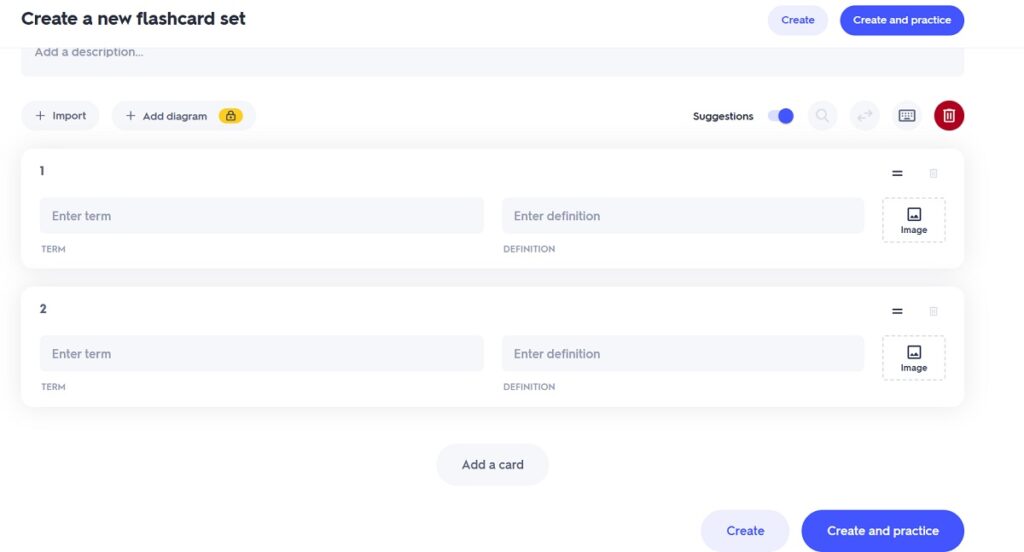
It is one of the most recognized names in digital learning. Millions of users use it daily to study languages, school subjects, and professional certifications. The tool is one of the easiest flashcard apps due to its clean interface and simple setup.
The app allows you to search through millions of publicly shared study sets without creating flashcards yourself. This is why Quizlet is helpful for those learning common vocabulary or preparing for classroom assignments.
Multiple study modes, quizzes, matching games, and spelling exercises are also available on this platform. It reduces repetition in revision.
Key Features
- Millions of ready-made flashcard sets
- Flashcards, Learn, Test, Match, and Write modes
- Audio pronunciation support
- AI-powered learning tools on premium plans
- Classroom sharing features
- Progress tracking
Pros and Cons
| Pros | Cons |
| Very beginner-friendly | Many advanced features require a subscription |
| Huge collection of public flashcards | Free version includes advertisements |
| Attractive and modern interface | Spaced repetition is less advanced than Anki |
| Excellent mobile experience | Quality of public flashcards varies |
| Great for collaborative learning |
Quizlet Pricing
- Free plan available
- Comes with 7 days trial
- Quizlet Plus (Annual): Around $35.99/year
- Quizlet Plus (Monthly): Around $7.99 to $9.99/month
- Quizlet Plus available with extra study tools and AI features
Who Should Use It?
- Beginners learning a new language
- School and college students
- Teachers creating classroom activities
- Learners who prefer ready-made study materials
It is an excellent option for those who want to start studying immediately without spending time building flashcard decks.
Brainscape for Language Learning
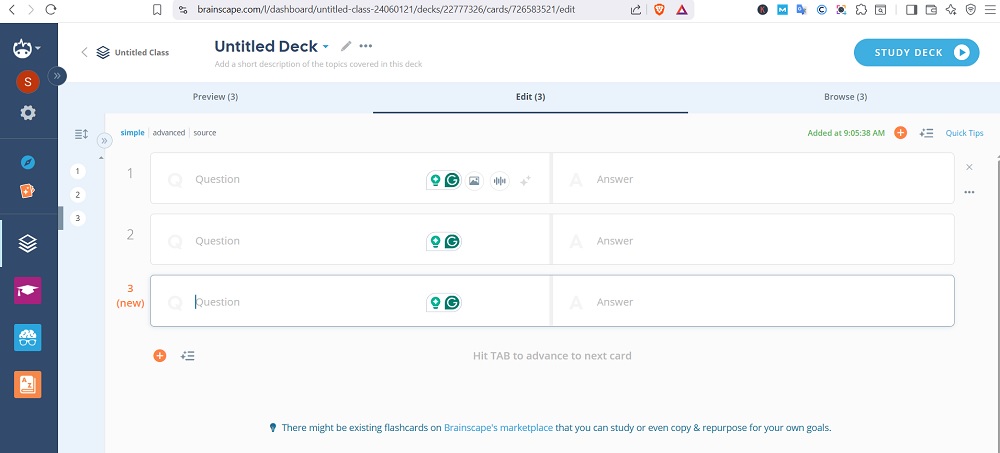
The app helps learners remember information through a confidence-based repetition system. Brainscape asks you to rate how well you know each flashcard after reviewing it instead of depending on the automatic review.
Although cards you rate higher appear less often, cards with your low rates appear more often. It motivates active recall and helps you spend more time on weak areas.
Brainscape also offers professionally created flashcards for several subjects. You can find pre-created flashcards for language learning, medical exams, business, law, standardized tests, etc.
The app also offers a clean, distraction-free, and easy-to-navigate interface on desktop and mobile devices. It, however, doesn’t have as many community-created decks as Quizlet or as much customization as Anki.
The app still delivers a structured learning experience.
Key Features
- Confidence-based repetition system
- Professionally curated flashcard decks
- Audio and image support
- Progress tracking
- Cross-device synchronization
- Classroom and educator tools
Pros And Cons
| Pros | Cons |
| Easy-to-use interface | Limited customization options |
| Excellent for structured study plans | Smaller free flashcard library |
| Effective review scheduling | Premium subscription needed for many features |
| High-quality premium content | Depends on honest self-assessment |
| Good mobile experience |
Brainscape Pricing
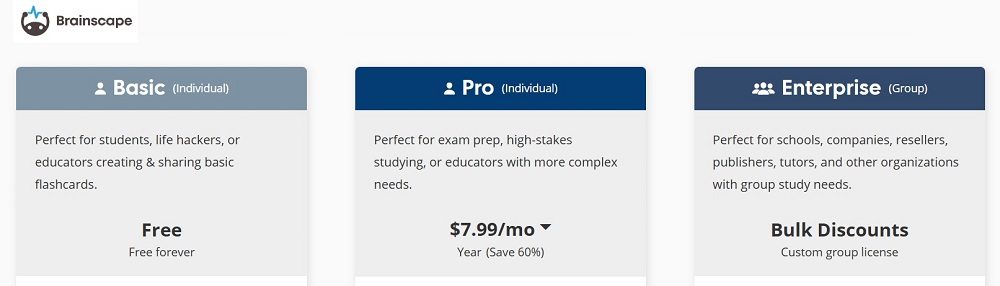
- Free version available with limited access
- Premium subscription unlocks complete content and additional features.
Who Should Use It?
- Students preparing for language certification exams
- Learners who want guided study sessions
- Users looking for professionally created flashcards
- People who want a simple learning experience without complex settings
Which Flashcard App Is Best?
Each app serves different kinds of objectives. That is why the right choice depends on your study and learning goals.
| Choose Anki if | Choose Quizlet if | Choose Brainscape if |
| You want complete control over your flashcards. | You want to start studying immediately. | You prefer a clean and simple interface. |
| You study daily and value long-term retention. | You are looking for ready-made flashcard collections. | You enjoy structured study sessions. |
| You are okay with spending time learning the software. | You want to study with classmates or teachers. | You want professionally created study materials. |
| You wish to create custom study decks. | You enjoy interactive learning modes. | You are preparing for language proficiency or standardized exams. |
Anki vs Quizlet vs Brainscape
| Feature | Winner | Reason To Become A Winner |
| Best Spaced Repetition | Anki | It has an advanced review algorithm for long-term memory |
| Best User Experience | Quizlet | This app has a modern design with easy navigation |
| Best for Beginners | Quizlet | Easy setup and ready-made flashcards |
| Best Customization | Anki | You can personalize around every aspect |
| Best Professional Content | Brainscape | High-quality curated flashcard collections are available |
| Best Collaboration | Quizlet | It offers shared study sets and classroom tools |
| Best Value | Anki | Powerful features available for free on most platforms |
Tips for Learning Languages with Flashcards
It is important to follow good study habits to get improves result apart from choosing the right app. The best suggestions for learning with these apps are:
- You should study for 15 to 30 minutes daily instead of long sessions once a week.
- It would be best to review older vocabulary before adding new words.
- You should include example sentences instead of learning isolated words.
- You must add audio pronunciation if possible.
- You should practice speaking the word aloud during each review.
- It would be helpful to organise flashcards by topic or difficulty level.
- You must remove duplicate or outdated flashcards regularly.
- It would be good to mix flashcards with reading, listening, and conversation practice.
Quick Recap
- You should choose Anki if you want powerful spaced repetition, complete customization, and long-term vocabulary retention.
- Quizlet is ideal for those who prefer an easy-to-use interface, ready-made flashcard sets, and interactive study modes.
- Brainscape is perfect for structured learning, confidence-based reviews, and professionally created flashcards.
- Anki is best for advanced learners, medical students, and anyone want to be consistent daily study.
- Beginners, teachers, and students can enjoy collaborative learning via Quizlet
- Brainscape is a great option for exam preparation. Learners who want a simple and organized study experience also like it.
- All three apps support mobile learning. They help improve vocabulary retention through regular review.
- You should consider your learning style, study goals, and preferred features if you want to choose the best flashcard learning app.
- Studying a little daily is as important as choosing an app.
Frequently Asked Questions
Which flashcard app is best for language learning?
Anki is usually considered the best choice for learners who want long-term vocabulary retention. Quizlet, however, is also ideal for beginners. But Brainscape works well for learners who prefer structured review sessions.
Is Anki completely free?
Yes, you can use Anki without paying a single penny on Android. But the iOS version still requires a one-time purchase.
Does Quizlet use spaced repetition?
Quizlet repeats difficult cards due to its learning feature. Its review system, though, is less advanced than Anki’s spaced repetition algorithm.
Is Brainscape good for beginners?
Yes, it offers a simple interface. It allows a beginner to start studying without spending time learning complicated settings. This is why it is helpful for those who only want to focus on learning.
Which app has the largest flashcard library?
Quizlet has one of the largest collections of public flashcard sets. Many students and teachers have created them around the world.
Can I use these apps offline?
Yes, you can use all three apps offline without an internet connection. Some features might need premium subscriptions or downloaded content.
Which app is best for learning vocabulary?
Although Anki is ideal for long-term vocabulary building, Quizlet stands out for fast learning. You can also consider Brainscape, as it gives a balanced approach with guided review sessions.
Verdict
All three flashcard apps are perfect for different reasons.
Anki’s proven spaced-repetition system and extensive customization options make it reliable for those seeking long-term language fluency. Quizlet is excellent for convenience and simplicity. But learners who want guided study sessions and curated content prefer Brainscape.
The best flashcard app is one meeting your goal.