
Mobile apps and online platforms have made learning new languages easier than ever. Rosetta Stone vs Babbel vs Duolingo is one of the common comparisons when learning new languages. Although these apps improve vocabulary, grammar, listening, and speaking skills, they are developed for different goals and learning habits.
Some learners often prefer an app to use for a few minutes daily. Others search for a structured course with detailed grammar lessons or a broader environment. This is because each platform has its own strengths.
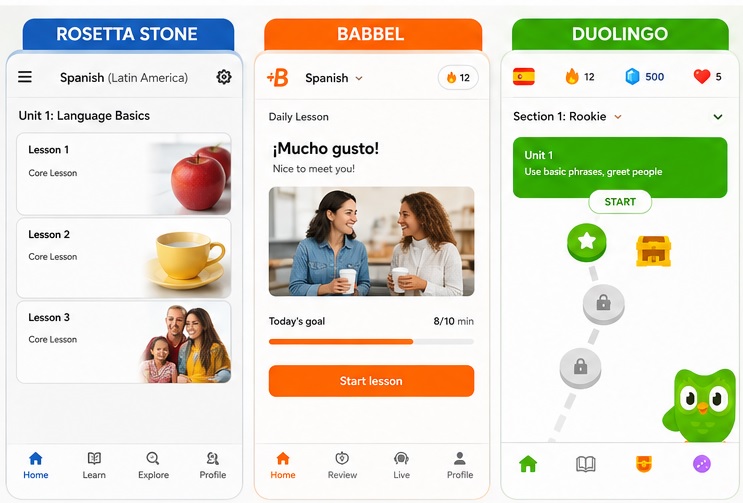
Duolingo’s game-like lesson attracts million of users. Babbel, however, prepares users for real-life situations via practical conversation and learning. Rosetta Stone also motivates learners to think in their target language through its attention-based approach.
This Rosetta Stone vs Babbel vs Duolingo comparison has been created to help people learn a new language. We will also help you understand which one you should use. You will get the detailed comparison of e the features, pricing, teaching methods, pros and cons, and ideal users for each platform in this comparison article.
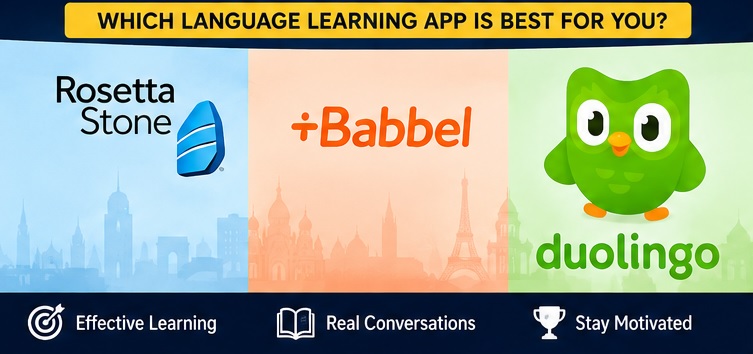
Rosetta Stone vs Babbel vs Duolingo: Quick Comparison
| Feature | Rosetta Stone | Babbel | Duolingo |
| Best For | Immersive language learning | Real conversations and grammar | Beginners and common learners |
| Teaching Style | Complete immersion without translations | Structured lessons with grammar explanations | Gamified lessons with small exercises |
| Grammar Instruction | Minimal | Detailed and practical | Basic |
| Speaking Practice | Excellent with speech recognition | Good with conversation exercises | Basic speaking practice |
| Pronunciation Support | Advanced speech recognition | Speech recognition | Limited compared to others |
| Lesson Length | 20–30 minutes | 10–15 minutes | 5–10 minutes |
| Free Version | No | No | Yes |
| Paid Plans | Subscription and lifetime options | Monthly and lifetime plans | Super and Max subscriptions |
| Languages Offered | 20+ languages | 14+ languages | 40+ languages |
| Who should use | Dedicated learners seeking immersion | Learners searching for structured progress | Users looking for free daily practice |
Rosetta Stone vs Babbel vs Duolingo: Key Features
Although Rosetta Stone, Babbel, and Duolingo help you learn new languages effectively, they have different features to do so. It is important to learn about them to choose the right one for your needs.
Rosetta Stone features
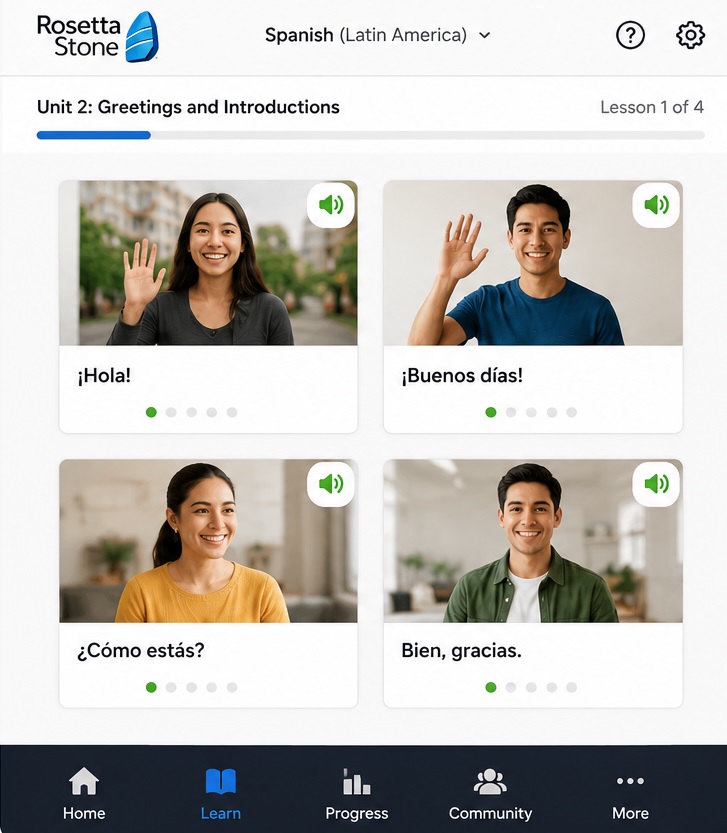
Rosetta Stone is created for engaging learning methods. It teaches through images, audio, and context instead of translating words into your local language. This method motivates learners to think directly in the language they are studying.
Its top features are:
- Dynamic immersion lessons with no translations
- TruAccent speech recognition for pronunciation practice
- Interactive speaking and listening exercises
- Lessons available to use across desktop and mobile devices
- Downloadable lessons for offline learning
- Lifetime subscription option for all supported languages
Read Also,
Memrise vs Duolingo: Which Is Better?
Memrise Review: Is Memrise Pro worth it?
Babbel Features
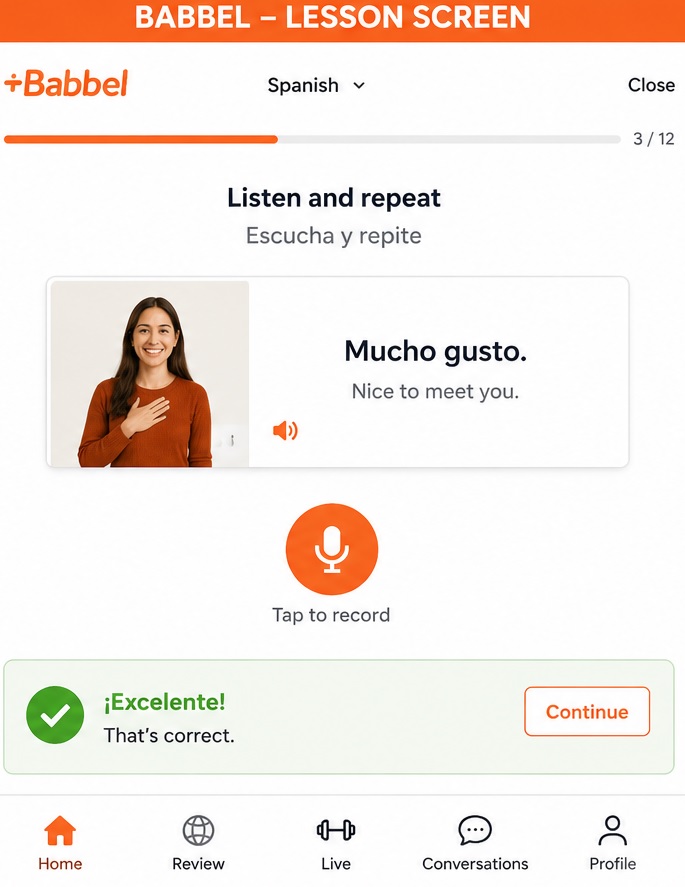
This app helps learners use a language in real-life situations. Conversations, grammar explanations, vocabulary, and pronunciation practice are part of its lessons. Its syllabus also has a structured path to help learners move from beginner to advanced topics.
Its main features are:
- Short lessons designed around everyday conversations
- Step-by-step grammar instruction
- Speech recognition technology
- Review sessions using spaced repetition
- Podcasts, games, and extra learning content
- Personalized review exercises
Duolingo Features
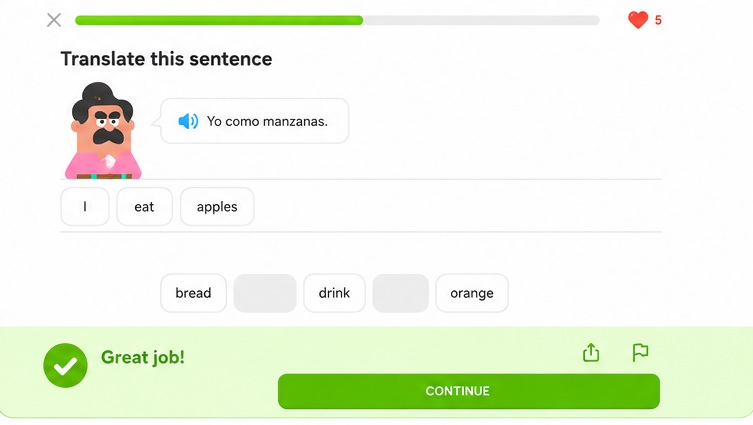
Duolingo offers a gaming-like experience while teaching new languages. Learners earn points, maintain daily streaks, unlock achievements, and compete on leaderboards on this app. Its free plan is one of the top reasons behind its popularity around the globe.
Here are the key features of Duolingo:
- Gamified learning with rewards and streaks
- Bite-sized lessons of around 5–10 minutes
- Large library of more than 40 languages
- Free access to basic lessons
- AI-powered features available with premium plans
- Daily goals and progress tracking
Which One Offers the Best Features?
- You should choose Rosetta Stone if pronunciation and immersive learning are your top priorities.
- You must select Babbel if you want structured lessons for real conversations.
- Opt for Duolingo because it is a free and engaging app to build a regular learning habit.
Duolingo might be perfect for beginners looking for a free app. Although a person getting ready for travel or work should use Babbel, Rosetta Stone is ideal for learning natural language skills and improving pronunciation.
Pros & Cons: Rosetta Stone vs Babbel vs Duolingo
Learners should understand the advantages and disadvantages when comparing three platforms.
| Platform | Benefits | Drawback |
| Rosetta Stone |
|
|
| Babbel |
|
|
| Duolingo |
|
|
Rosetta Stone vs Babbel vs Duolingo: Pricing
It is one of the important factors for opting for a learning app. Duolingo offers a free experience with some features. But Babbel and Rosetta Stone are only accessible after a paid subscription.
| Platform | Free Plan | Paid Plans | Lifetime Plan | Who Should Use It |
| Rosetta Stone | No | Monthly and yearly plans | Yes | Long-term learners |
| Babbel | No | Monthly and annual plans | Yes | Learners who wants a structured learning at a reasonable price |
| Duolingo | Yes | Super and Super Family subscriptions | No | Budget-conscious learners |
Rosetta Stone Pricing
It is a premium language-learning platform with a subscription plan and a famous lifetime membership. It focuses on long-term learning without offering a free plan.
Pricing
- Monthly: $19.99/month
- Yearly: $159/year
- Lifetime: Custom
What You Get:
- All-access subscription
- Immersive lessons
- Chat Missions
- Flashcards
- Sapphire Studio
It would be a good investment for learning a new language consistently for years without renewing your subscription.
Babbel Pricing
Monthly, quarterly, semiannual, annual, and lifetime plans are available on Babbel. There is also a group pricing option where up to six learners can study with a single subscription. Although there is no free plan, it has comparatively lower rates.
Individual Pricing:
- Monthly: $17.95/mo
- Quarterly: $45.75 per 3 months
- Semi-annual: $80.70 per 6 months
- Annual: $107.40/year
- Lifetime: $299
Group Pricing
- Monthly: $30.95/month
- Annual: $185.70/yearly
What You Get:
- All languages
- Bite-sized lessons
- Interactive speaking practice
- Immersive podcasts
- Progress tracking
- Full Individual Control
Duolingo Pricing
It is the only app offering a free version to its users. It lets you complete an entire course of study without spending a single penny. The free plan has:
- Core lessons
- Progress tracking
- Daily practice
- Access to most languages
Users still purchase the premium plans for access to its advanced features. Although the pricing for the paid subscription is not publicly available, it offers a 7-day free trial of its paid plan.
What You Will Get:
- Learning content
- Unlimited Hearts
- Skills practice
- Mistakes review
- Free challenge entry
- No ads
Duolingo is still the most affordable option for learning a new language.
Who should use Rosetta Stone vs Babbel vs Duolingo?
These apps target different types of learners. They should therefore consider their preferences to choose the right app:
It would be best to choose Rosetta Stone if you:
- Want an engaging learning experience.
- Prefer learning without ongoing translations.
- Care about improving pronunciation.
- Are comfortable learning through pictures and context.
- Plan to study a language for years.
You should use Babbel for:
- Structured lessons with simple grammar explanations.
- Genuine conversations for travel or work.
- Studying a planned syllabus.
- Balanced practice in speaking, reading, listening, etc.
You should choose Duolingo if you:
- Are learning your first international language.
- Want a free app.
- Enjoy lessons via gamification and daily streaks.
- Have only a few minutes daily to study.
- Need motivation to keep learning.
Frequently Asked Questions
Which is better between Rosetta Stone, Babbel, or Duolingo?
The best app depends on your genuine needs and learning habits. Learners searching for a free and engaging study platform would prefer Duolingo. Babbel, though, offers structured lessons, grammar explanations, and real-life interactions. Rosetta Stone, meanwhile, is popular for its immersive learning experience and speech recognition.
Which app offers the most languages?
Duolingo has the largest library of languages among all three apps. Babbel and Rosetta Stone focus on the most spoken languages.
Which app is the most affordable?
Duolingo is the most budget-friendly platform among Rosetta Stone, Babbel, and Duolingo. It offers access to all its courses for free.
Which app has the best pronunciation practice?
Rosetta Stone excels in this area due to its speech recognition feature. It also gives in-depth feedback and asks its learners to speak throughout the courses. Duolingo and Babbel also have speaking exercises.
Can I become fluent using only Duolingo?
It helps its users to learn vocabulary, practice sentence structures, and study regularly. It is alone, however, is not enough for full fluency. Reading, speaking, listening, etc are also needed to achieve proficiency.
Final Verdict
You should consider your learning goals, budget, and study method for choosing a winner between Rosetta Stone vs Babbel vs Duolingo.
Duolingo is a free and enjoyable app to start studying a language. Babbel, on the other hand, helps you communicate confidently in real-life situations. Rosetta Stone motivates users to think in their target language more effectively,
It would also be best to use a free trial to make a wise decision.