
- Language Learning Guide
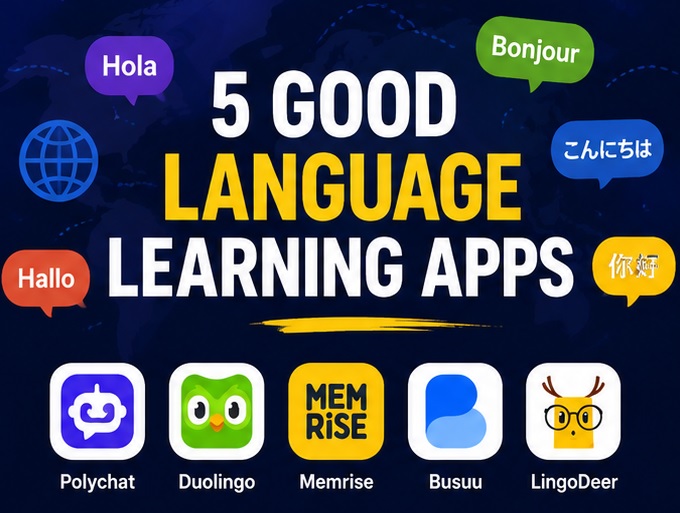
5 Good Language Learning Apps in 2026
It is a little easier to decide to learn a new language. But maintaining consistency is difficult. The lack of motivation isn’t the real problem- it’s about selecting the wrong language learning app.
- By S Kumar
- 14 min read
- Updated Aug 2026
- 5 Good language apps reviewed in detail
- Full comparison table: Best Language learning apps
- Tips to choose the right Language Learning app for your goals
Hola
Bonjour
你好
こんにちは
Browse Categories
Explore Our Resources
Find the perfect tool for your study needs across our curated categories.
AI Study Tools
Leverage AI to summarize, quiz, and break down complex topics instantly.
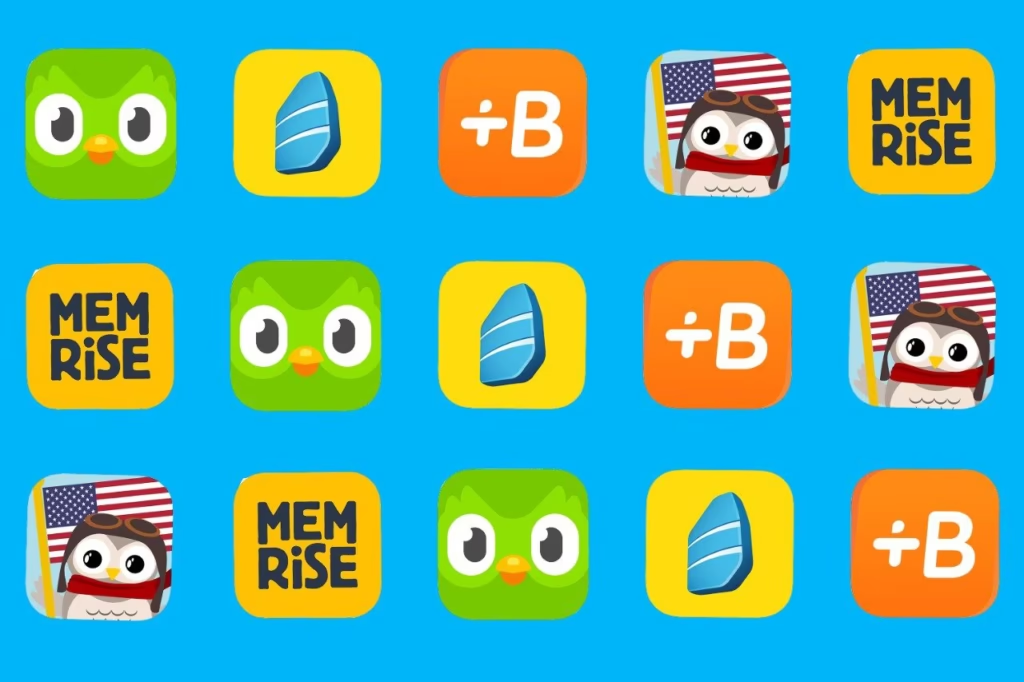

5 language apps every learner should know
5 Good Language Learning Apps every learner should know
Some labguage learning apps are built for daily habits, others for vocabulary, grammar, or structured learning.
PolyChat
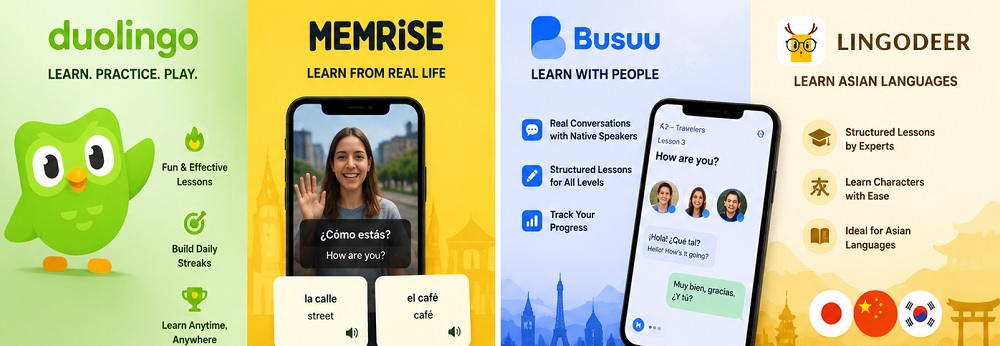
Duolingo
Memrise
Busuu
LingoDeer
At a Glance
Best language learning apps comparison
A quick side-by-side comparison of good language learning apps before you dive into the full reviews below.
App name
Why You Should Use
Benefits
Who Should Use It
PolyChat
Daily practice without limits
AI practice, vocabulary, etc.
Students, travelers, professionals
Duolingo
Develops daily learning habits
Gamification and short lessons
Beginners and regular learners
Memrise
Vocabulary with listening
Local speaker videos
Learners looking for natural communication
Busuu
Step-by-step learning
Grammar, lessons, and community feedback
Learners with particular goals
LingoDeer
Grammar and Asian language learning
Clear explanation
Beginners
Detailed Reviews
5 best language learning apps, reviewed
Click on any app below to expand its full review, top feature breakdowns, and target user recommendations.
PolyChat
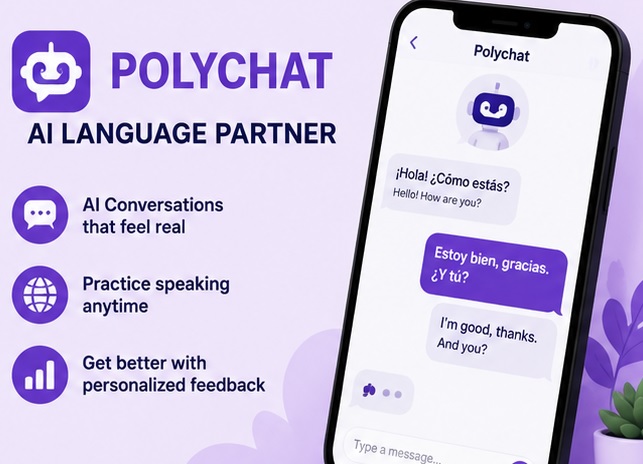
— Best for Unlimited PracticeLearners who want to study regularly without limits should use it. It is especially designed to help you make language learning engaging. PolyChat allows you to enjoy productive learning sessions. It tries to keep you practicing instead of limiting study sessions.
It supports Spanish, French, German, Italian, Portuguese, Dutch, Swedish, Danish, Norwegian, Romanian, Polish, Czech, Croatian, Catalan, Albanian, English, and Vietnamese. This is why it is helpful for multilingual learners as they can select different languages.
- Unlimited daily practice
- Combines different types of exercises
- 17 languages supported
- Offers repetition & AI learning
- Personal dictionary & progress tracking
Students, travellers, and experienced learners who want to spend more time practicing without restrictions.
Why PolyChat stands out
You can perform several kinds of practice here. Learners can thus work on vocabulary, conversations, translations, conjugations, games, AI-supported exercises, a personal dictionary, and progress tracking. It reduces the need to switch between different apps for learning.
Practice volume is its biggest advantage. The absence of hearts and energy limits helps students access longer sessions or repeat difficult material several times. Students, travellers, and experienced learners often appreciate this feature.
Strengths and Weaknesses
Polychat is a strong choice when study limits stop you from learning. It is especially perfect for learners to spend more time practicing.
Duolingo
— Best for Daily HabitBeginners should use it for consistency and motivation.
Duolingo is one of the easiest apps to start learning. Its short lessons, streaks, rewards, and game-like format encourage everyone to open the app daily. Beginners often enjoy using it because its free plan lowers the restrictions to start learning.
Duolingo also gives you a clear path and small tasks to complete. It lets you spend more time practicing than finding the right lessons to study. Although it has reading, listening, vocabulary, and speaking-related activities, the language determines the depth of the activities.
- Short daily lessons
- Streak and reward system
- Beginner-friendly learning path
- Reading and listening activities
- Free version available
Beginners who want consistency, motivation and a simple daily language-learning habit.
Where Duolingo works best
It is especially useful for beginners. Short lessons fit the study lessons into a busy schedule. The streak, however, motivates learners to come back daily.
The problems come when you want more open-ended interaction. Recognition exercises help you learn words and sentence phrases. But you must produce language without multiple options during real conversation. Spontaneous speaking and deeper explanation can also add value in the learning phases.
Strengths and Weaknesses
Memrise
— Best for VocabularyLearners should use it for vocabulary, listening, and natural pronunciation.
Memrise uses local speakers' videos as the main source for learning new languages. It allows you to understand the exact way of speaking in your target language. This is therefore ideal for learners who struggle to understand spoken words even after recognizing them in writing.
It also uses repeated exposure, short activities, and native-speaker material to help its users understand common words and phrases in their target language. AI speaking feature is also another reliable way for speaking practice.
- Native speaker video clips
- Vocabulary practice
- Listening exposure
- Short learning sessions
- AI speaking practice
Learners who want better vocabulary, listening exposure and more natural pronunciation.
Where Memrise fits into a study routine
It is a strong listening and vocabulary tool. Memrise can also work well with structured lessons because it offers extra exposure to words and their expressions.
Learners looking for a detailed syllabus with grammar progression might find it insufficient. The free plan also has some restrictions because some speaking, offline, and other features require a paid plan.
Strengths and Weaknesses
Memrise should be used for vocabulary and listening practice. You can also use it with other tools when you want a structured course for deep learning.
Busuu
— Best Structured CourseLearning searching for structure and human feedbacks should definitely try it.
Busuu offers a combination of traditional learning and a gamified language experience. Although it follows a clear learning progression, its community features give feedback from real users and native speakers.
This is why it is especially important for learners who are looking for more features than only tapping through the exercises. You can also submit your writing and speaking activities for correction in the community.
Your progress is also easier to understand in terms of proficiency level because its courses are CEFR-aligned.
- Clear structured courses
- Grammar and vocabulary
- Community feedback
- CEFR-aligned progression
- Goal-focused learning
Learners who want structured courses, progression and feedback from real users and native speakers.
Why choose Busuu?
Learners can enjoy lessons, grammar explanations, vocabulary activities, and production exercises without depending only on games and streaks.
Some learners may not like its free plan restrictions. Although its free plan has a small collection of lessons and vocabulary practice, richer grammar, study plans, speaking, and AI features are accessible with a paid plan.
This is why it is ideal for those willing to pay for their learning.
Strengths and Weaknesses
LingoDeer
— Best for Asian LanguagesStructured and beginner learners should use it to learn Asian languages.
It is useful for learners to understand the language process instead of just memorizing words. Grammar, sentence structure, pronunciation, script practice, and clear explanations are the core of its course.
It is useful for learning Japanese, Korean, and Chinese, where you may need to understand writing and sentence patterns.
LingoDeer is also a calmer and more methodical option due to built-in reviews, test-outs, native audio, and script support. Its free plan also offers an ideal way to know its teaching style before moving forward to its paid plan.
- Detailed grammar explanations
- Asian language support
- Script learning
- Short lessons
- Audio and review tools
Structured beginners who want to understand grammar and sentence structure, especially in Asian languages.
Where LingoDeer shines
Some learners don’t enjoy guessing grammar rules from repeated examples. They want to understand the exact reason behind the sentence structure. This is where LingoDeer excels by providing detailed explanations.
Its lessons are also divided into manageable sections. This is thus suitable for learners who only want to focus on a single topic instead of learning everything at once.
Most of its content requires a premium subscription purchase. It should therefore be considered a structured option with limited free options.
Strengths and Weaknesses
LingoDeer is best for understanding grammar and sentence structure in Asian languages.
Find Your Fit
Which language learning app is good for you?
Every Language app is built for a different purpose. You can even combine two—like using Busuu for structured lessons and Memrise for vocabulary reinforcement.
PolyChat
Best for learners who want unlimited daily practice without heart or energy limits.
Duolingo
Perfect for developing daily habits to learn new languages.
Busuu
It provides the best structured course for language learners.
LingoDeer
Lingodeer is always considered a priority by Asian language learners.
Before You Download
How to choose the right language learning apps?
The best language learning app is the one that engages you in its learning content. It should offer an enjoyable experience instead of just forcing you to study.
1.Match Your Learning Style
Some apps are built for daily habits, others for deeper grammar or vocabulary. Pick the one that fits how you actually learn.
2. Focus on Your Goal
Are you learning for travel, school, or fluency? Choose an app that aligns with your specific goal.
3. Consider Free Plans
Most apps limit features on free plans. Check if the free version offers enough practice to meet your needs.
Before You Start Using
Before you start using language learning app
Now, we will talk about the points that you should keep in mind while choosing any of the good language learning apps discussed in this page.
What to look for in a free plan: Unlimited practice, offline access, detailed grammar content, speaking exercises, or specialized preparation. A free version might be enough for exploring a language or understanding basic vocabulary.
Some apps offer a complete free tier, while others offer limited samples to ask you to subscribe when you get used to it. This difference is important because language learning relies on repetition.
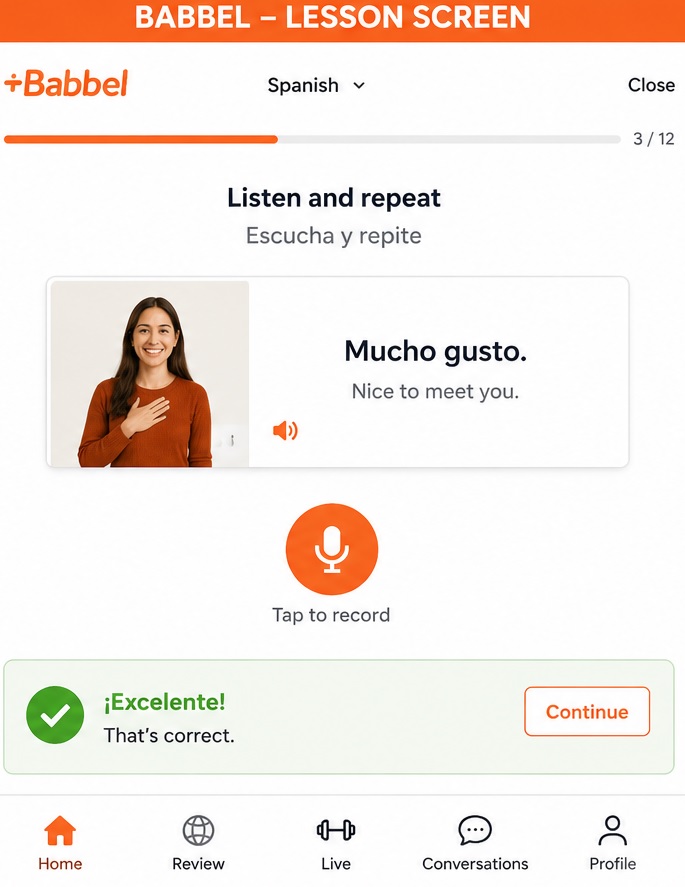
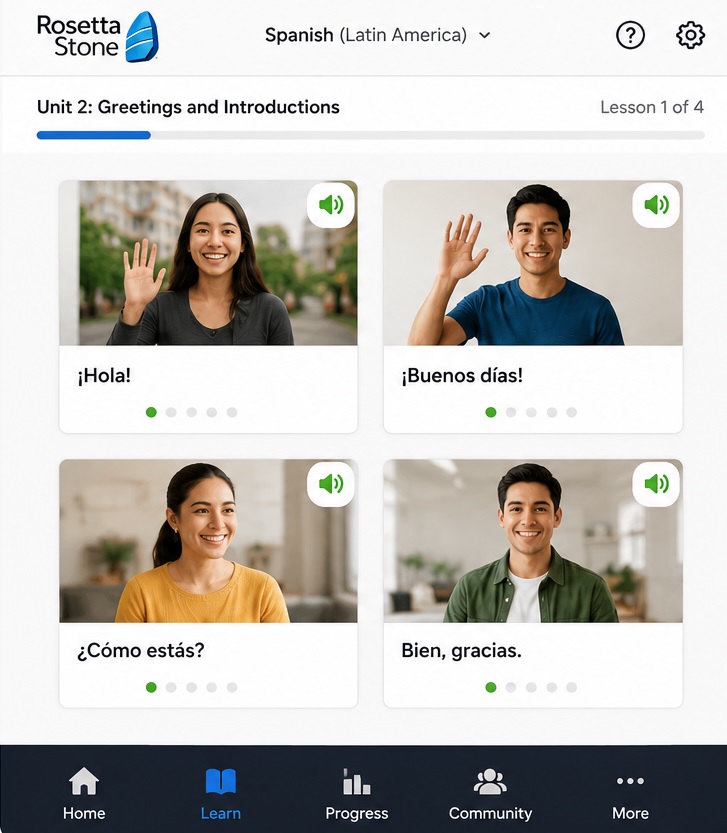
- Unlimited practice — ensures you can repeat difficult material without restrictions.
- Offline access — lets you study anywhere, anytime.
- Grammar explanations — helps you understand the “why” behind sentence structures.
- Speaking exercises — crucial for building pronunciation and conversational skills.
Questions & Answers
Frequently Asked Questions
Got questions about pricing, offline access, or combining these tools?
Which language learning app is best for beginners?
Duolingo is among the easiest apps available when you are just starting to learn new languages in 2026. LingoDeer is also a great option for those who want a deeper explanation of grammar.
Which app is best for vocabulary?
Memrise can be an ideal option for vocabulary due to its s vocabulary-focused practice and native-speaker videos. Polychat can, however, also be helpful for repeated vocabulary learning.
Which app is best for speaking?
There’s no single ideal app for speaking practice in language learning. But some platforms with AI-supported conversation can help you with that. Although PolyChat offers speaking practice through AI, Busuu also offers feedback from real users. They can ideally be used to improve speaking skills.
Should I use more than one app?
Yes, you can definitely use two or more apps to excel in every field of language learning. It would also be best to avoid using multiple apps because they can make practicing harder. You should only use 2 apps, where one should be your main app and the other should be used to address its weaknesses.
Final Verdict on Language Learning Apps
Each learner has different problems when learning a new language. This is why there is no best app among these 5 learning apps. PolyChat is perfect for limitless practice without restrictions. Duolingo is excellent for starting as a beginner and gaining enough motivation to keep learning. Memrise can be used for vocabulary learning, Busuu is perfect for structured lessons and real feedback, and LingoDeer for grammar-focused learning in Asian languages.
- Best Unlimited: PolyChat
- Best Daily Habit: Duolingo
- Best Vocab: Memrise
- Best Structure: Busuu
- Best Grammar: LingoDeer