
Looking for the best AI Flashcards App or the best digital Flashcards app? Then you are in the right place. It may take hours to study from long PDFs, lecture notes, and textbooks before starting revision. AI tools convert study material into questions, cards, summaries, and review sessions to reduce that preparation time.
Digital Flashcards App and AI Flashcards App
The right choice depends on your specific needs and requirements. Although some apps represent spaced repetition as their strengths, others use AI to create cards from PDFs, images, or notes. We’ll compare top flashcard apps based on their features, pricing, ease of use, and the type of student they suit.
Quick Comparison Table
| Apps | Main powers | AI features | Where can be used | Costs |
| RemNote | Notes & spaced repetition | AI card generation & image cards | iOS, Windows, Mac, Linux, Android, and Web | Free and premium |
| Anki | Customizable repetition | Third-party tools | Android, Windows, Mac, Linux, iOS, and Web | Free and paid iOS version |
| Mindomax | AI Cards | PDF, Lectures, text, and other material generation | Android, Windows, Mac, Linux, iOS, and Web | Free version |
| Mochi Card | Markdown-based card | Fewer compared to other tools | Mac, Linux, Windows, iOS, and Android | Freemium |
| Quizlet | Shared study sets | AI creation with practice | iOS, Android, and Web | Paid and free options are there |
Top AI & Digital Flashcards Apps
1. RemNote
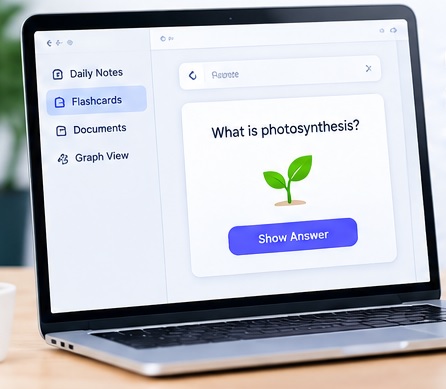
Note-taking and spaced repetition are integrated here. Students can use it to convert notes into cards and use AI to generate study material. PDF annotation, image-based card creation, image OCR, and Anki imports are also available here. It is perfect for medicine, biology, languages, and other terminology subjects.
Pros & Cons
| Strengths | Weaknesses |
| Cards and notes are combined here | Hard learning curve |
| AI cards | Some setup needed for advanced features |
| Image-to-card | |
| Spaced repetition |
Pricing
Basic features with unlimited card creation are available in the free version. Most AI features are only available at $20 per month in Pto with the AI plan.
Who Should Use It
Students looking for a place where they can keep notes and cards together should use it.
2. Anki– Best Digital Flashcards App
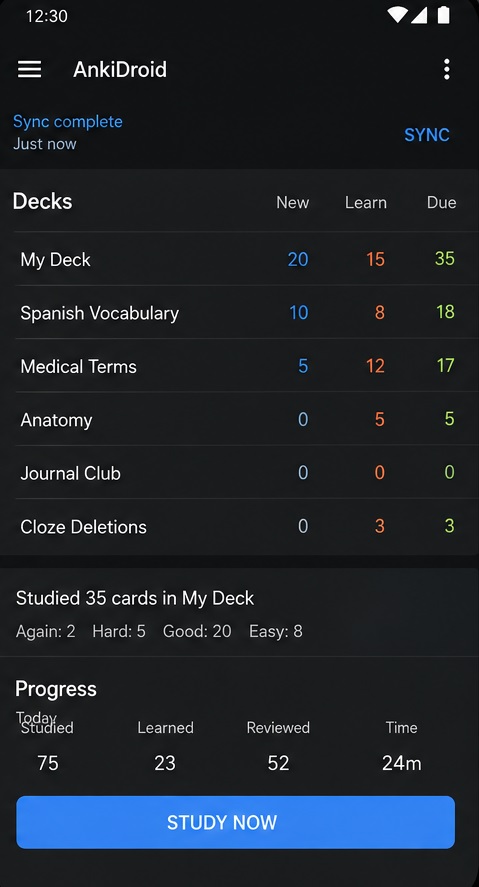
Spaced repetition is its main feature. It gives its users complete control over card creation and review schedules. Anki works across Windows, Mac, Linux, Android, iOS, and the web through AnkiWeb. Third-party tools can be used to create cards before being imported here.
Anki Pros & Cons
| Strengths | Weaknesses |
| Powerful spaced repetition | Older interface |
| Free desktop & Android version | Card creation may take time |
| Big community deck library | |
| Many ads are there. | |
| Synchronization on multi-devices |
Anki Pricing
$24.99 one-time payment is required to use it on iOS devices.
Who Should Use It?
Students who want complete control over their card design can give it a try.
Check them;
Is AnkiDroid Safe? Expert Review
Ankiweb vs Ankidroid: Why People love Ankiweb?
Anki vs Memrise (2026): Which Flashcard App Is Better?
Flashcard for medical students: Anki & Memrizz (2 Best Apps)
3. Mindomax
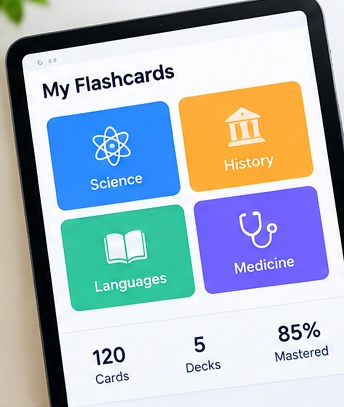
It mainly focuses on AI-generated flashcards. Its system automatically generates your cards based on your PDFs, recorded lectures, photographed handwritten notes, or even pasted text. A big library of premade cards, pronunciation support, and tools for mathematical formulas are also here.
Pros & Cons
| Strengths | Weaknesses |
| AI card creation | No desktop version |
| Image and PDF support | Limited free requests |
| Lecture inputs | |
| Helpful materials | |
| Available on most devices |
Pricing
This platform is currently offering free services until 2028.
Who Should Use It
Anyone who doesn’t want to waste their time creating cards manually can use it.
4. Mochi Cards
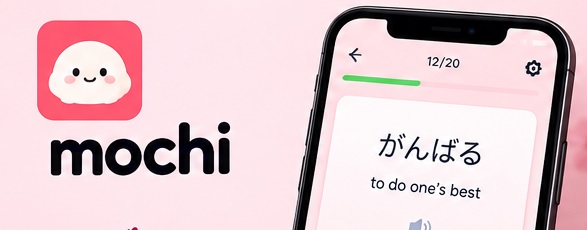
Markdown is used on Mochi Cards for card creation in a minimal interface. Image occlusion, bidirectional linking, Anki deck imports, dictionaries, text-to-speech, and translation features are available here.
Pros & Cons
| Strengths | Weaknesses |
| Clean interface | Paid version needed for cross-device sync |
| Markdown support | Less AI focused |
| Offline use | |
| Anki import | |
| Different desktop platform |
Pricing
Premium features are available at $5 per month.
Who Should Use It
Students looking for simple Markdown-based study material must use it.
5. Quizlet- Best Ai Flashcards App
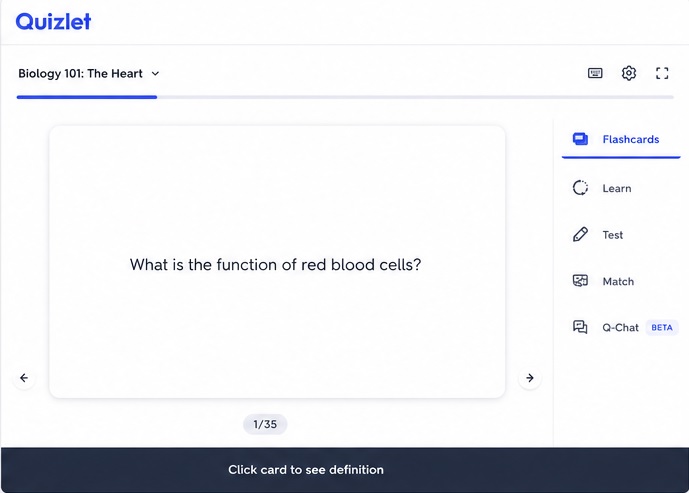
Digital cards and a large collection of shared decks can be easily accessed here. Its AI features help students create and practice sets faster. The shared decks are also useful for classmates who study the same subjects. Here you can read detailed Quizlet review with their pros and cons.
Pros & Cons
| Strengths | Weaknesses |
| Large collection of shared sets | No desktop app |
| AI set creation | Less useful for students studying through the unique PDF lectures |
| Mobile apps | |
| Browser access | |
| Helpful for group study |
Quizlet Pricing
Although Quizlet Plus is available at $7.99 per month or $35.99 per year with limited features, its Unlimited plan offers complete access at $9.99 per month or $44.99 per year.
Who should Use It
It is perfect for ready-made sets or regularly sharing study material with classmates.
Read Also,
Quizlet vs Anki: Which Flashcard App Is Better?
Best Notecard App: This #1 Notecard App is my Favorite
FAQs to Ai & Digital Flashcards App
Which app is best for AI-generated cards?
Mindomax and RemNote generally focus on AI-generated cards. But other apps also offer useful AI features.
Which AI & Digital Flashcards app is free?
Although most apps offer their free trial or plan with limitations, Mindomax is offering all its premium features for free. Anki also offers a free version on desktop, web, and Android devices.
Are digital cards useful for studying?
Indeed, they are ideal for recalling an answer instead of rereading it. Spaced repetition here can also spread reviews over time.
Final Verdict
There’s no single best digital flashcard app today. RemNote is ideal for storing notes, AI generation, and spaced repetition. Anyone can use Anki for customizable card creation. Mindomax has been created around AI-generated flashcards from different study materials.
Although Quizlet can be used for shared sets and classroom study, Mochi Card is perfect for those looking for Markdown and local-first app for studying.
No matter which app you use. It would be best to edit AI-generated material before using it. You must build a review routine instead of wasting your time on creating hundreds of cards.